- Best suited
- Exploration: ideation, reframing, options.
- Misalignment cost
- Forced execution reduces range.
The Rhythmic Architecture of Mind (R.A.M.)
R.A.M. (The Rhythmic Architecture of Mind) is a universal decision framework that models cognition as dynamic rhythms influencing clarity, action, communication, and human-AI interaction across individual, organizational, and global domains.
A rhythm-based decision framework for clarity, action, and human-AI interaction - designed to be readable by humans and machines.
Publications: jpwinter.co.uk/paper/ -> (Google Scholar-ready + PDF citation)
The world accelerates. The mind doesn't compute - it pulses. When rhythm and action mismatch, we call it overwhelm.
Participate in the experiment ->
View live results ->
Methodology & protocol ->
Publications ->
Official records
"The modern world is not broken - it is out of rhythm."
Framework (applied summary)
Definition. R.A.M. is a universal decision framework that integrates rhythm-based cognitive modeling with structured conceptual architecture, describing how dynamic mental rhythms shape decision-making, communication, action, and human-AI interaction across individual, organizational, and global contexts.
v1.0 prioritizes architectural clarity and boundaries before empirical operationalization.
Four cognitive rhythms
Creative Rhythm
Expansive, imaginative, possibility-oriented.
Analytical Rhythm
Structured, logical, detail-oriented.
- Best suited
- Evaluation: compare, verify, structure information.
- Misalignment cost
- Premature analysis shrinks creative space.
Executive Rhythm
Action-driven, implementation and completion.
- Best suited
- Execution: choose, act, deliver, close loops.
- Misalignment cost
- Execution under blockage amplifies stall.
Blocked Rhythm
Resistance / overwhelm / stuckness a signal, not a failure.
- Best suited
- Pause: rest, reset, reduce load, regain space.
- Misalignment cost
- Self-forcing turns signal into fatigue.
Five components
Rhythm Identification
Recognize the current state.
Decision Flow
Match decision type to rhythm.
Mental Space
Emotional Cognitive Environmental conditions for clarity.
Pattern Mapping
Observe recurring patterns across contexts.
Rhythm-Aligned Action
Act in harmony with the current rhythm.
Method (5 steps)
- Identify the current rhythm.
- Match decisions to rhythm.
- Adjust mental space.
- Map patterns over time.
- Act in alignment.
Applications
Individuals Teams Organizations Education Multicultural communication HumanAI collaboration
Whitepaper (official records)
DOWNLOAD / READ
Zenodo (v1.0): 10.5281/zenodo.18198847 |
Zenodo (Meta-Cognitive): 10.5281/zenodo.18803288 |
SSRN: 10.2139/ssrn.6051914 |
OSF: 10.17605/OSF.IO/ZP7DC
Zenodo Records
SSRN
Preferred citation
Palade, I. (2026). The Rhythmic Architecture of Mind (R.A.M.): A Rhythm-Based Cognitive Architecture for Decision-Making and Human-AI Interaction (v1.0). Zenodo. https://doi.org/10.5281/zenodo.18198847
Palade, I. (2026). R.A.M. A Meta-Cognitive Alignment Architecture for Reducing Cognitive Friction in Human and Human-AI Interaction. Zenodo. https://doi.org/10.5281/zenodo.18803288
References (selected)
Scope & claims. R.A.M. v1.0 is presented as a conceptual decision framework focused on theoretical coherence and boundaries, prior to empirical operationalization.
How to cite
Palade, I. (2026). The Rhythmic Architecture of Mind (R.A.M.): A Rhythm-Based Cognitive Architecture for Decision-Making and Human-AI Interaction (v1.0).
Zenodo. https://doi.org/10.5281/zenodo.18198847
Palade, I. (2026). R.A.M. A Meta-Cognitive Alignment Architecture for Reducing Cognitive Friction in Human and Human-AI Interaction.
Zenodo. https://doi.org/10.5281/zenodo.18803288
Selected references
- Clark, A. (1997). Being There: Putting Brain, Body, and World Together Again. MIT Press.
- Csikszentmihalyi, M. (1990). Flow: The Psychology of Optimal Experience. Harper & Row.
- Endsley, M. R. (1995). Toward a theory of situation awareness in dynamic systems. Human Factors, 37(1), 32-64.
- Hutchins, E. (1995). Cognition in the Wild. MIT Press.
- Kahneman, D. (2011). Thinking, Fast and Slow. Farrar, Straus and Giroux.
- Sweller, J. (1988). Cognitive load during problem solving: Effects on learning. Cognitive Science, 12(2), 257-285.
Full list appears in the whitepaper (Zenodo / SSRN / OSF).
A friendly note to Academia
Invitation: please improve R.A.M. - or (if you must) break it. Either way, you're helping. Just do it with precision and good faith.
If new ideas trigger an immediate "no", that's fine. Take a breath. Then aim the critique at the model, not the person. (Your reputation will survive.)
How to play
- Steelman first (make it stronger), then test it.
- Point to the exact sentence you disagree with.
- Offer an alternative model (bonus points for elegance).
- Bring data - or a falsifiable thought experiment.
What counts as a contribution
- Operationalization (measures, tasks, protocols)
- Boundary critique (what it explains vs. doesn't)
- Applied case studies (education, orgs, HCI, AI)
- Rhythm-aware prompting evaluation
Send your best shot
Publish a critique, replication, extension, or "this is why it fails" note - then email it. If you're right, R.A.M. becomes better. If you're wrong, you still wrote something interesting.
Contact: contact@jpwinter.co.uk
If you must reject it, reject it precisely.
Books (J.P. Winter)
The R.A.M. Protocol
Why AI answers feel heavier than they should
The R.A.M. Manifesto
A statement of the problem: rhythm mismatch
R.A.M. - The Rhythmic Architecture of Mind
A book-length articulation of the framework
STOP FORCING YOURSELF
A companion to Blocked Rhythm as signal
FAQ
What is R.A.M.?
R.A.M. (The Rhythmic Architecture of Mind) is a universal decision framework that models cognition as dynamic rhythms influencing clarity, action, communication, and human-AI interaction across domains.
Is R.A.M. a personality test?
No. It describes dynamic states (rhythms), not fixed identity types.
How can R.A.M. help with AI interaction?
It frames collaboration as rhythm-aware: AI can adapt structure, pacing, and output style to the user's current rhythm.
Author
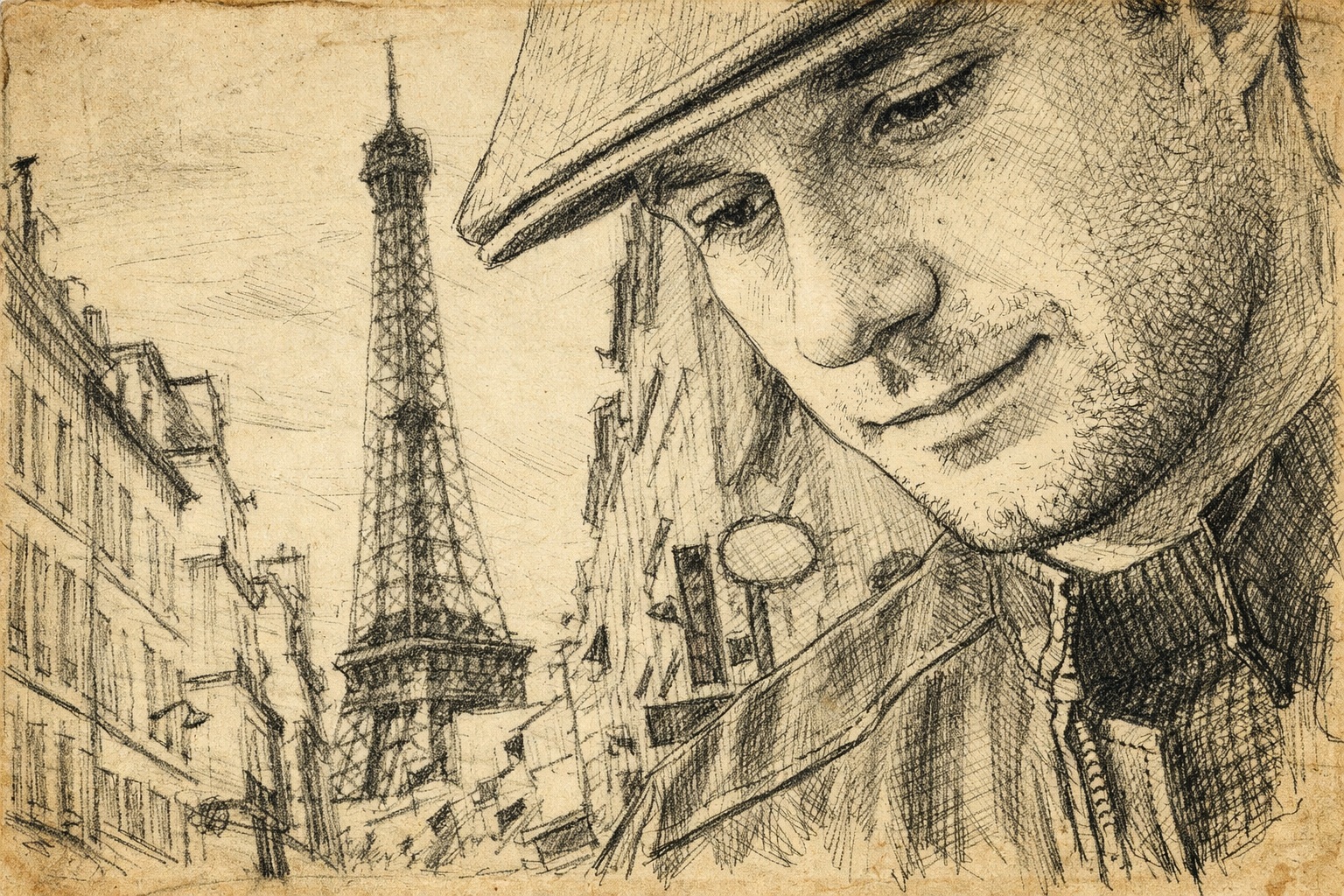
ARCHIVE PHOTO
Contact
Email: contact@jpwinter.co.uk
For: collaborations | research | talks | organizational adoption | human-AI protocol design.